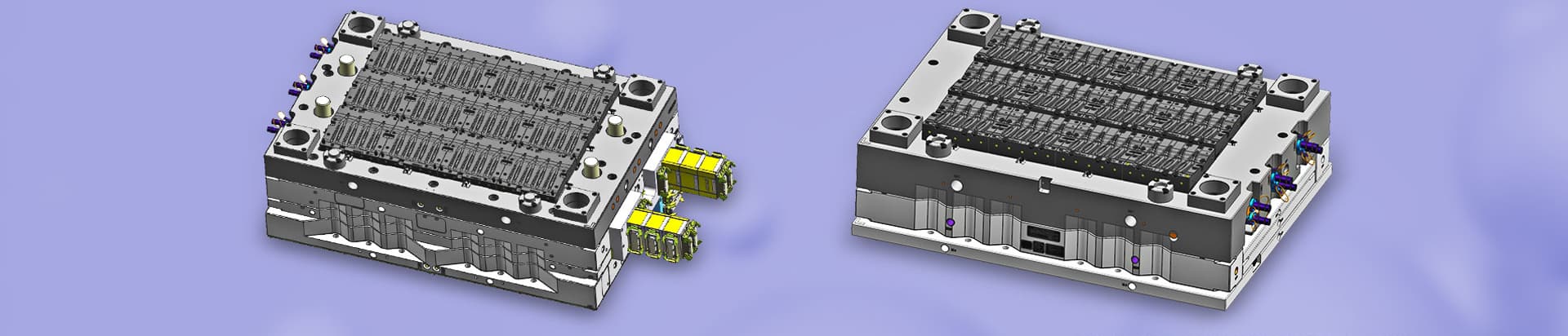
1. Preparation for wire cutting
The wire cutting adopts the precision slow-moving wire cutting machine, the machining accuracy is ±0.001mm, and the roughness Ra=0.2um. When choosing a deionized waterline cutting wire with high deionization degree, the verticality meets the requirements of precision mould processing accuracy, the tension is moderate, and the material of the cutting wire is compatible with the material of the workpiece, so as to ensure a reasonable processing speed.
2. Processing route design
The original stress balance of the material by wire cutting is destroyed during the processing, causing stress concentration at the corners. The method to deal with the stress concentration is to use the vector translation principle, leave 0.8~0.9 mm before finishing the precision mould, pre-machine the rough shape of the cavity, and then perform heat treatment to release the machining stress as much as possible before finishing, so as to gaurantee the thermal stability.
3. EDM process
In EDM, rough and fine electrodes are produced respectively. The fine electrode is processed by CNC numerical control machine tool. Cu-W alloy electrodes have good comprehensive performance, and the electrode loss is smaller than that of copper electrodes. Under good chip removal conditions, precision moulds can process difficult-to-machine materials and parts with complex cross-sectional shapes. Ag-W alloy electrodes have better performance than Cu-W alloy electrodes and are used for precision machining. Graphite electrodes are made of imported graphite with low loss, high hardness, fast galvanic corrosion and low surface roughness. Precise trimming is arranged before the end of EDM to remove the hardened thin layer formed on the surface.
1. Surface treatment
The precision mould is surface-treated after finishing. The surface of the workpiece is free of pores, uniform in hardness, small in anisotropic characteristics, low in inclusions, and free of tool marks and wear marks on the surface of the parts where the stress is concentrated. The edges, acute angles and holes of the workpiece are blunted by polishing, grinding, and fitter grinding. After electrical machining, the surface is gray-white, and the 6-10 m metamorphic hardened layer needs to be removed. This layer is brittle and has residual stress, and the hardened layer should be fully removed before use.
2. Precision mould assembly
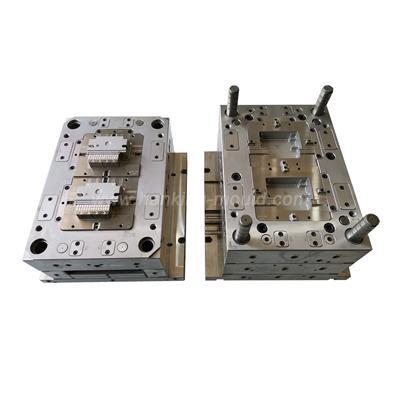
The workpiece should be fully demagnetized before assembly, and the surface should be cleaned with ethyl acetate. In the process of grinding and electrical machining, the workpiece will be magnetized to a certain extent, and it has a weak magnetic force, which is easy to absorb some small debris. During the assembly process: fully understand the structure and technical requirements of the assembly drawing, and arrange all kinds of parts. Correctly list the assembly order of components relative to each other. Check the dimensional accuracy of each component and clarify the matching requirements. Complete the required assembly tools. First install the guide post and guide sleeve of the mold base part of the precision mould, and the inlaid combination of the cavity forming block components. The assembly template is combined with punch and die to adjust the position of each plate. Open and close the mold to check whether the mold action is accurate and reliable.


 Call us on:
  Email Us:
  1st Floor, Block1, No.3 Beiting Road, Houting Community, ShaJing Street, Bao'An District, Shenzhen City, Guangdong Province, China
  English
 Deutsch
 italiano
 русский
 français
 română
 العربية
 Español
 Polska
 日本語
日本語 한국어
한국어