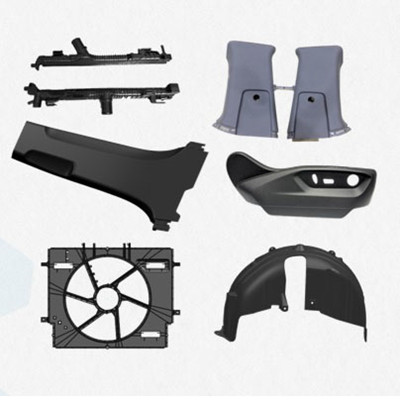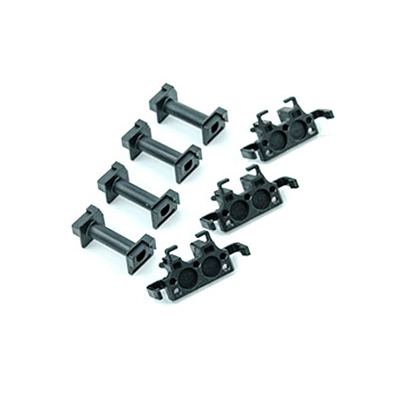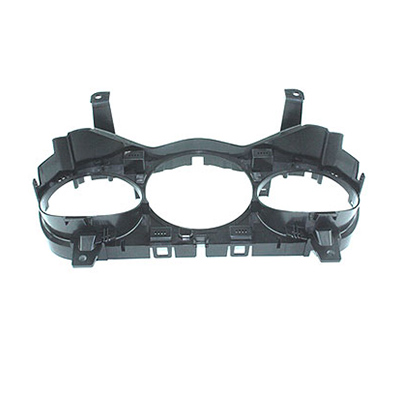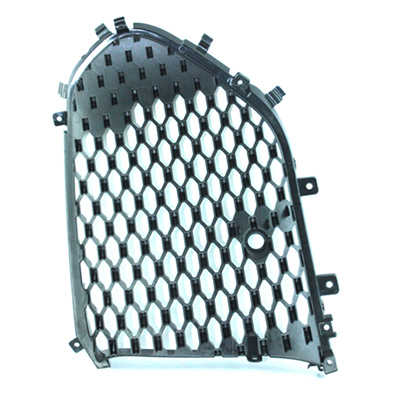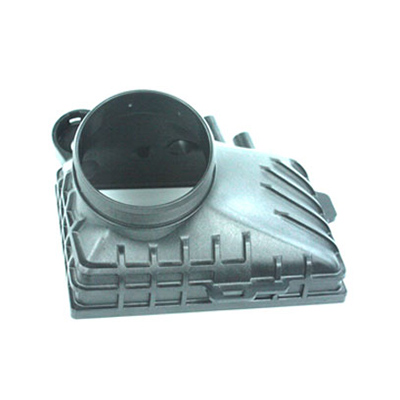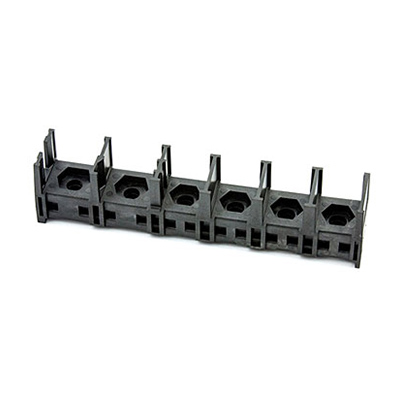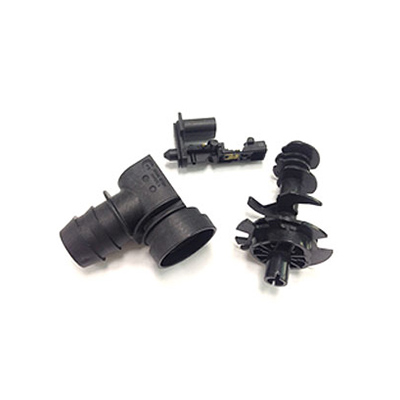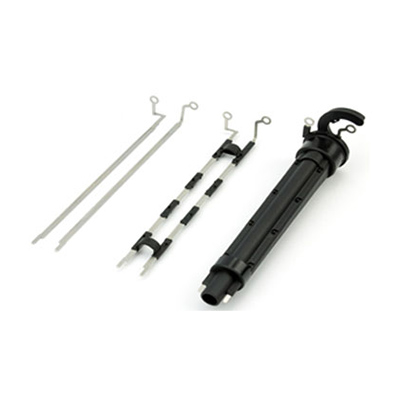
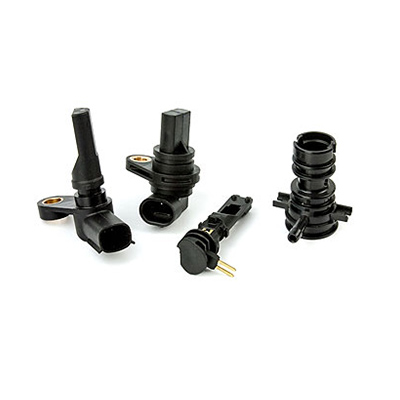
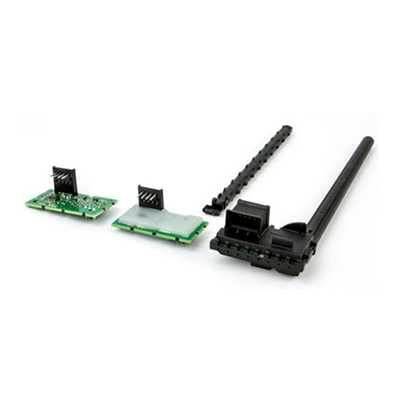
HanKing Mould involves various automotive injection mould, our engineers are familiar with the characteristics of nylon, PC, PBT, POM and other plastics. According to the characteristics of different plastics, the structure of different products, our tool designers designed the moulds to meet the requirements of the production molds.
Commonly plastics used in automobiles accessories:
Nylon is mainly used in automobile engines and engine peripherals. The main varieties are PA6GF, PA66GF, and reinforced flame retardant PA6.
A. Application on the peripheral components of automotive engines: Since the peripheral components of the engine are mainly heat-generating and vibrating components, most of the materials used for the components are glass-reinforced nylon. This is because nylon has a good overall performance, and the main properties of the glass-modified nylon are greatly improved, such as strength, product precision, dimensional stability and so on. In addition, nylon has many varieties, is easy to recycle, and the price is relatively cheap. These factors make nylon an ideal choice for engine peripheral components. The intake manifold is the most typical application of the modified nylon material in the automotive field. In the year 1990, the glass fiber reinforced nylon was first used to manufacture the intake manifold, applied to the engine, and then the modified nylon intake manifold was world widely used in automotive companies.
B. Applications in automotive engine components: engine hoods, engine trim covers, cylinder head covers and other components generally use modified nylon as the preferred material. Compared with metal materials, the cylinder head cover is taken as an example, the quality is reduced by 50%, and the cost is reduced. 30%. In addition to engine components, reinforced nylon can also be used for other force components of the car, such as oil filters, wipers, radiator grills, etc..
In the field of automobile manufacturing, PBT is widely used in the production of bumpers, carburetor components, fenders, spoilers, spark plug terminal plates, fuel supply system parts, instrument panels, car igniters, accelerators and clutch pedals. PBT and enhanced PA, PC, POM are very competitive in the automotive industry, PA is easy to absorb water, PC heat resistance is not as good as PBT. Since PBT has better water absorption resistance than PA, it may gradually replace PA. In the case of relatively high humidity conditions, PBT is often used because moisture tends to cause plasticity to decrease, and electrical joints are prone to corrosion. When the temperature reaches 80 degrees and 90% relative humidity, PBT can still be used normally, and good results.
The automotive industry is the largest potential market for POM materials. POM has the advantages of a lightweight, high hardness, wear resistance, creep resistance, chemical corrosion resistance, etc. It is very suitable for the manufacture of automotive pumps, carburetor components, oil pipelines, power valves, universal joint bearings, motor gears, cranks, handles, instrument panels, window lifts, electric switches, seat belt buckles, etc., especially wear parts such as sliders are the strengths of modified POM. These parts have less wear on metals, reducing the amount of lubricant and enhancing the life of the component.
Modified PC has excellent heat resistance, impact resistance, rigidity and good processing fluidity. It is mainly used in automotive parts for exterior and interior accessories, instrument panel peripherals, antifreeze boards, door handles, brackets, steering column sheaths, decorative panels, air conditioning system accessories, lamp parts, etc..




 Call us on:
  Email Us:
  1st Floor, Block1, No.3 Beiting Road, Houting Community, ShaJing Street, Bao'An District, Shenzhen City, Guangdong Province, China
  English
 Deutsch
 italiano
 русский
 français
 română
 العربية
 Español
 Polska
 日本語
日本語 한국어
한국어