1. Overview and Fundamental Principle of Injection Molding Residual Stress
Residual internal stress is a common inherent defect in plastic injection molding, referring to the balanced internal force existing inside finished plastic parts without any external load. This undesirable stress originates from two core physical changes during molding. Firstly, during melt filling and pressure holding, polymer molecular chains are stretched and aligned along the flow direction. Rapid cooling solidifies the chains in this unstable oriented state before they can return to their natural relaxed conformation, forming flow-induced orientation stress. Secondly, the inconsistent cooling rate between the product’s outer surface and inner core leads to asynchronous shrinkage. The pre-solidified surface layer restricts the shrinkage of the still-soft inner core, generating tensile stress on the exterior and compressive stress in the core, namely cooling-induced stress.
This residual stress issue is more pronounced in high-rigidity and polar polymers including PC, PS and POM. If not eliminated effectively, it will trigger a series of quality problems such as part warpage, dimensional distortion, structural cracking and surface micro-cracks, severely compromising the precision, stability and service life of injection-molded plastic components.
2. Key Root Causes of Internal Stress Generation
The formation of internal stress in injection molding is a comprehensive result of technological, structural, material and operational factors, with the main triggers summarized as follows:
Uneven cooling distribution serves as a primary inducement. Variable wall thickness of plastic parts and low mold temperature will create disparate cooling and shrinkage rates across different product zones. The mutual constraint between fast-cooling and slow-cooling areas produces persistent tensile and compressive stress inside the parts.
Unreasonable injection parameters lead to excessive molecular orientation. Aggressive injection speed and high pressure will force polymer chains to undergo directional stretching. The rapid solidification process locks these over-stretched molecular structures, leaving permanent residual orientation stress inside the material.
Defective material pretreatment and structural design also contribute to stress formation. Hygroscopic engineering plastics like nylon and PC must be fully dried before molding; residual moisture will disrupt melt uniformity and induce abnormal internal stress. Moreover, the mismatch of thermal expansion coefficients between plastic materials and metal inserts will cause inconsistent shrinkage during cooling, further exacerbating internal stress accumulation.
3. Systematic Improvement Strategies for Internal Stress Control
To address internal stress defects fundamentally, a full-process control system covering parameter optimization, mold upgrading, material management and post-processing is required. This systematic approach can effectively suppress stress generation during production and remove residual stress in finished products.
3.1 Optimize Molding Parameters for Low-Stress Production
Fine-tuning injection molding parameters is the most direct and efficient way to reduce in-process stress. Appropriately elevating barrel and mold temperatures can enhance melt fluidity, allowing polymer chains to stretch freely and achieve sufficient stress relaxation. Replacing high-speed and high-pressure injection with moderate-speed and low-pressure molding can effectively avoid artificial over-stretching of molecular chains.
Optimization of molding cycle parameters is equally critical. Reducing excessive holding pressure and holding time prevents over-compaction of melt materials, while extending in-mold cooling time ensures uniform solidification of the entire part and minimizes shrinkage differences. Meanwhile, standardized raw material drying procedures must be implemented to eliminate stress anomalies caused by moisture contamination.
3.2 Upgrade Mold Design to Achieve Uniform Molding
Scientific mold design is the structural guarantee for stress control. The product structure should maintain uniform wall thickness with smooth transition sections to avoid stress mutation caused by abrupt thickness changes. All sharp corners and hole edges need to be modified with rounded transitions to eliminate localized stress concentration points, which are the main failure triggers of plastic parts.
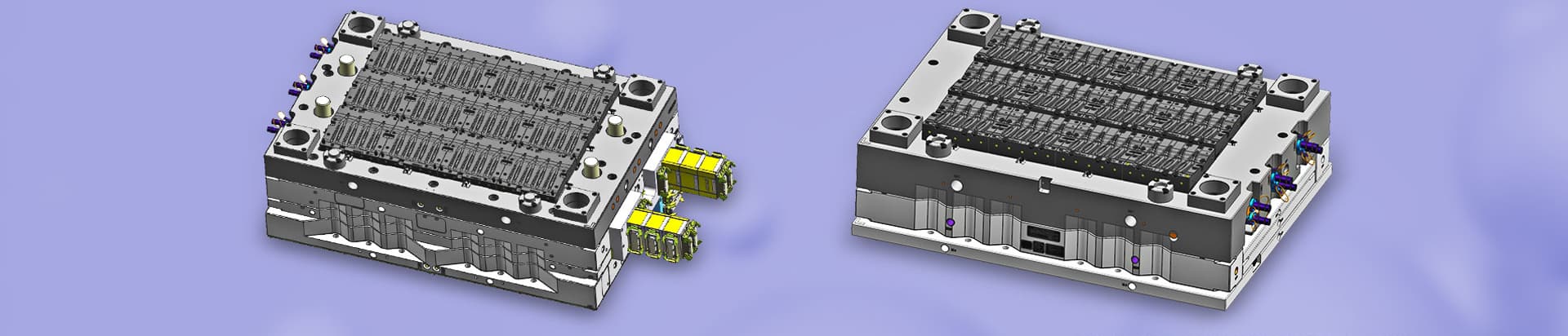
Optimized gating and cooling systems are essential. Adopting multi-point balanced gating systems shortens melt flow paths and prevents unidirectional long-distance filling-induced molecular over-orientation. The conformal cooling channel design ensures symmetric and synchronous temperature control for mold cavities and cores, realizing consistent cooling effect throughout the product and eliminating cooling-induced stress from the source.
3.3 Standardize Material Management and Storage Specifications
Scientific material pretreatment and finished product management can effectively prevent secondary stress defects. On the basis of full drying of raw materials, finished plastic parts should be stored flat and layered. Overlapping stacking and heavy compression are strictly prohibited to avoid deformation and secondary stress caused by external extrusion. A constant temperature and humidity storage environment is necessary to stabilize the product structure and avoid stress fluctuation induced by environmental changes.
In subsequent processing and assembly stages, low-intensity operation specifications should be followed. Rough clamping and forced assembly are forbidden to prevent artificial damage and new residual stress in plastic parts.
3.4 Adopt Post-Processing Technologies for Residual Stress Elimination
For residual stress that cannot be completely avoided during molding, targeted post-treatment can achieve effective removal. The mainstream annealing process heats plastic parts to a temperature 20-30℃ below their thermal deformation temperature and maintains the temperature for 1 to 2 hours. This treatment enables disordered molecular chains to rearrange into a stable equilibrium state and release internal residual stress thoroughly. For small and thin-walled precision parts, constant-temperature warm water soaking is adopted as a mild treatment method to eliminate surface stress and improve product surface quality efficiently.
1. Definition and Essence of Injection Molding Internal Stress
Injection molding internal stress refers to the self-balancing residual stress retained inside plastic products without external force, which forms during the entire injection molding process. It mainly consists of two types of stress. The first is orientation internal stress: during the filling and holding stage, polymer chains are forcibly stretched and oriented along the melt flow direction, and fail to relax fully due to rapid cooling, thus forming frozen high elastic deformation. The second is cooling internal stress: the surface layer of the product solidifies and shrinks first, but is restricted by the inner layer that is still shrinking, resulting in an uneven shrinkage state where the surface is tensioned and the core is compressed.
Essentially, injection molding internal stress is the internal force generated when polymer chains recover from the non-equilibrium conformation formed during molding to the natural equilibrium state, which is an inherent residual phenomenon in injection molding. This defect is more prominent in rigid and polar molecular chain materials such as PC, PS and POM. Unremoved internal stress will directly cause product defects including warpage, deformation, cracking and surface silver streaks, seriously damaging the dimensional accuracy, structural stability and service life of plastic products.
2. Main Inducing Factors of Internal Stress
The generation of injection molding internal stress is affected by multiple factors including molding technology, mold structure, material properties and production operations, which are detailed as follows:
First, uneven cooling and shrinkage. Differences in product wall thickness and excessively low mold temperature will lead to inconsistent solidification and shrinkage speeds in different parts of the plastic part. The mutual traction of materials forms internal tensile stress, which is the main cause of cooling internal stress.
Second, excessive orientation of polymer chains. Excessively high injection speed, injection pressure and holding pressure will forcibly stretch the polymer chains in the melt, making them arrange directionally along the flow direction. The chains cannot relax fully before cooling and solidification, thus forming permanent orientation stress.
Third, improper material characteristics and pretreatment. Hygroscopic materials such as PC and nylon will produce abnormal internal stress if not completely dried before production due to residual moisture damaging melt uniformity. In addition, for products with embedded metal inserts, the large difference in thermal expansion and contraction coefficients between plastic and metal will cause inconsistent shrinkage after molding and induce residual internal stress.
3. Comprehensive Prevention and Elimination Solutions for Internal Stress
Based on the generation mechanism of internal stress, four core measures including process parameter adjustment, mold structure optimization, raw material standardized management and post-molding treatment can be adopted to inhibit stress generation from the source and eliminate residual stress thoroughly, so as to solve product stress defects in an all-round way.
3.1 Optimize Process Parameters to Reduce Stress at the Source
Process parameters are the core link of internal stress control. Precise parameter adjustment can avoid excessive molecular stretching and uneven cooling. Production requires appropriately raising the temperature of the barrel and mold to improve melt fluidity, make polymer chain arrangement more stretched and reserve sufficient space for molecular relaxation. Abandon the high-speed and high-pressure molding mode, adopt medium and low-speed injection, and reduce injection and holding pressure to prevent forced stretching of molecular chains by external forces.
Reasonably adjust the molding duration: shorten the holding time to avoid internal stress caused by excessive material compaction, and extend the in-mold cooling time to ensure synchronous shaping of the inner and outer layers of the product and reduce shrinkage differences. In addition, strictly implement thorough drying pretreatment for hygroscopic raw materials to avoid abnormal stress caused by moisture.
3.2 Improve Mold Structure for Balanced Molding
Mold structure directly determines melt flow and cooling effect, which is the key to preventing stress concentration. In the design stage, ensure uniform overall wall thickness of the product with gentle transition at thick-thin junction areas to eliminate uneven shrinkage caused by local wall thickness mutation. Adopt arc transition for all joints such as corners and hole positions to completely remove stress concentration hidden dangers of right angles and acute angles.
In terms of gate layout, adopt multi-point balanced glue feeding to shorten the one-way flow distance of melt and avoid excessive molecular directional stretching caused by long-distance filling. The cooling system is arranged around the product shape to ensure symmetrical temperature control of the cavity and core, realize all-round synchronous and balanced cooling of the product, and avoid cooling stress from the structural level.
3.3 Standardize Raw Material and Warehouse Management to Avoid Secondary Stress
Raw material quality and product storage environment indirectly affect the internal stress state. In addition to thorough raw material drying before production, the storage of finished products shall be standardized with flat lay and layered placement. Stacking and heavy pressure are strictly prohibited to prevent secondary internal stress caused by external compression. Meanwhile, maintain a constant temperature and humidity storage environment to reduce product shrinkage deformation caused by temperature and humidity fluctuations and ensure structural stability of molded products.
Subsequent deep processing procedures such as cutting and assembly shall adopt gentle operation standards. Violent clamping and forced assembly are forbidden to prevent new stress defects induced by manual operation.
3.4 Post-Molding Treatment to Eliminate Residual Stress
For products with residual internal stress after molding, professional post-treatment processes can be used for stress release. The most commonly used constant temperature annealing treatment is to place the product in an environment 20-30℃ lower than its thermal deformation temperature and keep it warm for 1-2 hours. This process promotes the regular rearrangement of disordered internal polymer chains and fully releases residual stress. For small thin-walled plastic products, constant temperature warm water soaking can be adopted for mild treatment to quickly eliminate surface stress and improve surface defects.




 Call us on:
  Email Us:
  1st Floor, Block1, No.3 Beiting Road, Houting Community, ShaJing Street, Bao'An District, Shenzhen City, Guangdong Province, China
  English
 Deutsch
 italiano
 русский
 français
 română
 العربية
 Español
 Polska
 日本語
日本語 한국어
한국어